
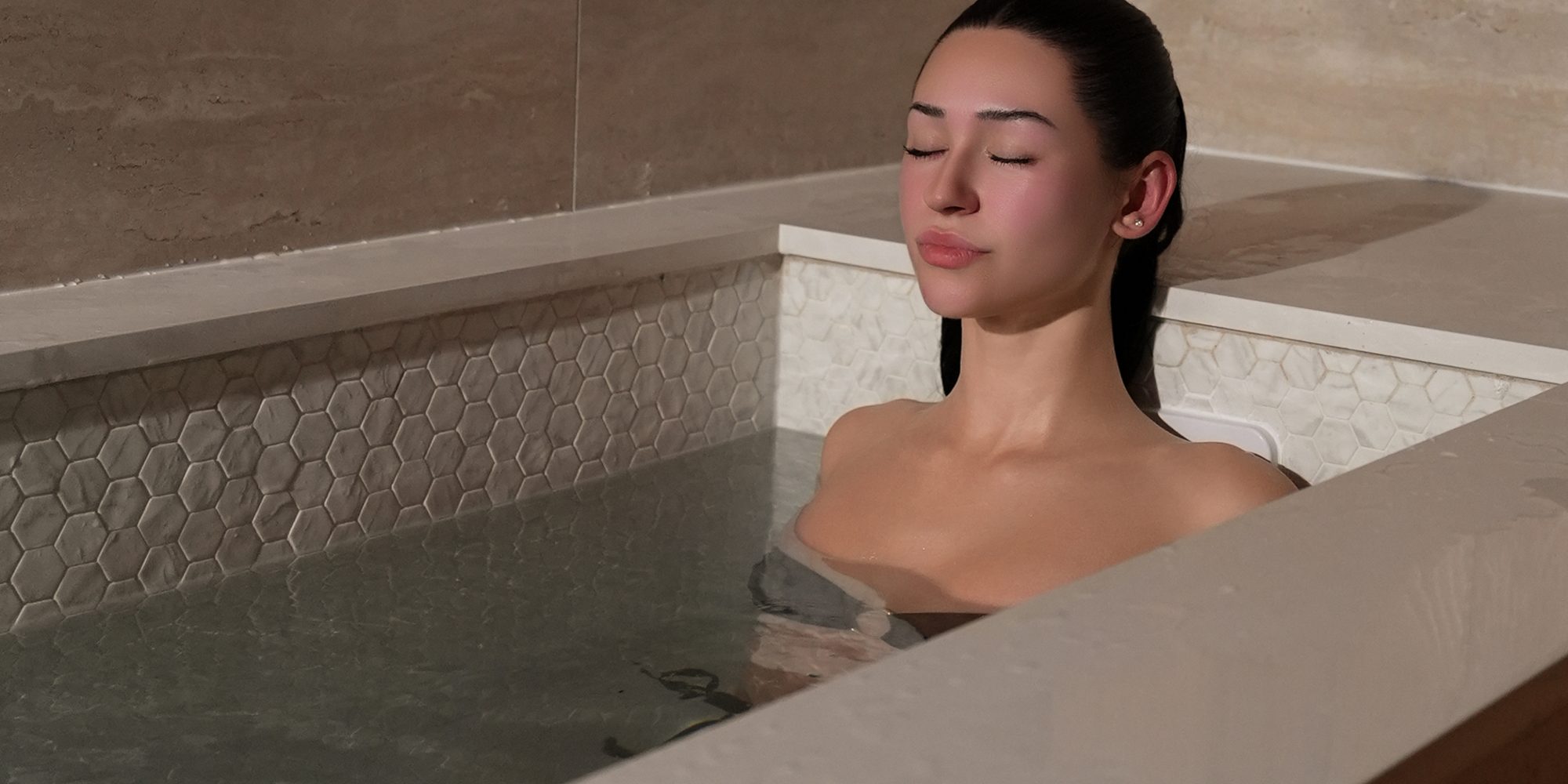
Breathwork has become one of the most searched wellness practices in Canada, and for good reason: it is free, it takes a few minutes, and you can do it almost anywhere. But what is breathwork, does it actually help, and how should a beginner start? This guide covers the basics, what the research suggests, three simple techniques, and the safety rules everyone should know. At Club Sūdō, our Guided contrast therapy sessions combine breath work with heat and cold exposure, led by an instructor, so it is one of the easiest ways to try breathwork classes near you in Vaughan and North Toronto.
What Is Breathwork?
Researchers describe breathwork simply as the deliberate control of the breath. Instead of breathing on autopilot, you change the pace, depth or pattern of your breathing on purpose. There are many styles, but most fall into a few broad families:
- Slow-paced breathing, sometimes called coherent breathing, at around five or six breaths per minute.
- Exhale-focused breathing, where the out-breath is longer than the in-breath. One version studied at Stanford is called cyclic sighing.
- Box breathing, with equal counts for breathing in, holding, breathing out and holding again.
- Faster, more intense breathing with breath holds, often called cyclic hyperventilation with retention. This style is more demanding and is not where beginners should start.
What the Research Suggests
A 2023 meta-analysis in Scientific Reports pooled randomized controlled trials of breathwork. Across 12 trials and 785 adults, breathwork was associated with lower self-reported stress than control conditions, a small to medium effect. Similar effects were found for symptoms of anxiety and depression. The authors called the results encouraging, but noted that most studies had a moderate risk of bias and urged caution so the hype does not get ahead of the evidence.
A remote randomized study from Stanford, published in Cell Reports Medicine in 2023, compared three daily five-minute breathing exercises with five minutes of mindfulness meditation over one month. Breathwork, especially exhale-focused cyclic sighing, produced greater improvement in mood and a larger drop in resting breathing rate than meditation. The authors concluded that daily five-minute cyclic sighing shows promise as a stress management exercise.
Not every study is positive. In a larger 2023 trial of 400 people, ten minutes a day of slow coherent breathing for four weeks did not improve mental health and wellbeing more than a well-designed "placebo" breathing exercise. Both groups improved. One reasonable takeaway is that setting aside a few calm minutes for your breath each day may be valuable in itself, whichever technique you choose.
Three Simple Techniques to Try
Practise these seated or lying down, somewhere safe and away from water. Breathe through your nose if you can, and stop if you feel dizzy.
1. The long exhale
Breathe in gently through your nose, then breathe out slowly through your mouth so the exhale takes longer than the inhale. Keep it relaxed and unforced. Try it for five minutes. This is the same idea behind the exhale-focused breathing that did well in the Stanford study.
2. Box breathing
Breathe in for a count of four, hold for four, breathe out for four, and hold for four. Repeat for a few minutes. If the holds feel uncomfortable, shorten them or drop them.
3. Slow-paced breathing
Breathe in for about five seconds and out for about five seconds, which works out to roughly six breaths per minute. A simple timer or app can help you keep the rhythm. Aim for five to ten minutes.
How Often Should You Practise?
There is no proven ideal dose, but the studies above give a useful starting point. The Stanford participants practised for five minutes a day, and the coherent breathing trial used about ten minutes a day for four weeks. For most beginners, a few minutes once or twice a day is plenty. Consistency matters more than intensity: a short, relaxed session you actually do every day is more useful than a long, forceful one you dread. Many people like to pair it with something they already do, such as the first few minutes after waking, a break between meetings, or winding down before bed.
Breathwork With Heat and Cold
Breathing is closely tied to how your body handles heat and cold. Stepping into cold water triggers what the U.S. National Weather Service calls cold shock, which can cause involuntary gasping and rapid breathing. Learning to settle your breathing is part of what makes cold exposure feel manageable for many people.
That is why our Guided sessions pair the two. An instructor takes you through breathwork and timed heat and cold cycles in our traditional sauna and cold plunge, so you are never left guessing. If you would rather move at your own pace, Open Flow sessions let you explore the space freely with on-floor staff available. Learn more in our guides to cold plunge benefits, the benefits of the sauna and what contrast therapy is. Red light therapy is also part of the contrast therapy experience at Club Sūdō.
Breathwork Safety: The Rules That Matter
- Never practise breath holds or fast breathing in or near water. Life saving organizations warn that hyperventilating or holding your breath before going under water can cause a sudden loss of consciousness, called hypoxic or shallow water blackout, which can lead to drowning. Keep breathing exercises out of pools, plunges and baths.
- Never practise while driving or doing anything where a moment of light-headedness could be dangerous.
- Check with your doctor first if you are pregnant, or have a heart, lung or seizure condition. Fast breathing is used in clinics on purpose to bring out seizure activity during EEG tests, so intense styles are not for people with epilepsy.
- Dizziness or tingling means stop. Return to normal, relaxed breathing and rest until you feel steady.
Breathwork Classes Near You
If you are looking for breathwork classes in Toronto or York Region, a guided session is the simplest way to start. Club Sūdō is at 16 Famous Ave, Unit 145, in Vaughan, near the Colossus Centre at Weston Road and Highway 7, a short drive from Woodbridge, Maple, Richmond Hill and North York. We are open Monday to Friday 6am to 10pm, Saturday 7am to 8pm and Sunday 8am to 8pm. Explore contrast therapy, book a Guided session, or see memberships and passes.
Sources
- Fincham GW, Strauss C, Montero-Marin J, Cavanagh K. Effect of breathwork on stress and mental health: A meta-analysis of randomised-controlled trials. Scientific Reports. 2023;13:432. https://doi.org/10.1038/s41598-022-27247-y
- Balban MY, Neri E, Kogon MM, et al. Brief structured respiration practices enhance mood and reduce physiological arousal. Cell Reports Medicine. 2023;4(1):100895. https://doi.org/10.1016/j.xcrm.2022.100895
- Fincham GW, et al. Effect of coherent breathing on mental health and wellbeing: a randomised placebo-controlled trial. Scientific Reports. 2023;13:22141. https://doi.org/10.1038/s41598-023-49279-8
- U.S. National Weather Service. Cold Water Hazards and Safety. https://www.weather.gov/safety/coldwater
- Royal Life Saving Society UK. Shallow Water Blackout, Hyperventilation, and Breath Holding. https://www.rlss.org.uk/shallow-water-blackout-hyperventilation-and-breath-holding-gs005
- Royal Life Saving Society Australia. Hypoxic Blackout. https://www.royallifesaving.com.au/stay-safe-active/risk-factors/hypoxic-blackout
- ANS/BSCN Guidelines for Hyperventilation During EEG Recordings. https://www.bscn.org.uk/data/files/Guidelines/Hypervent.pdf