
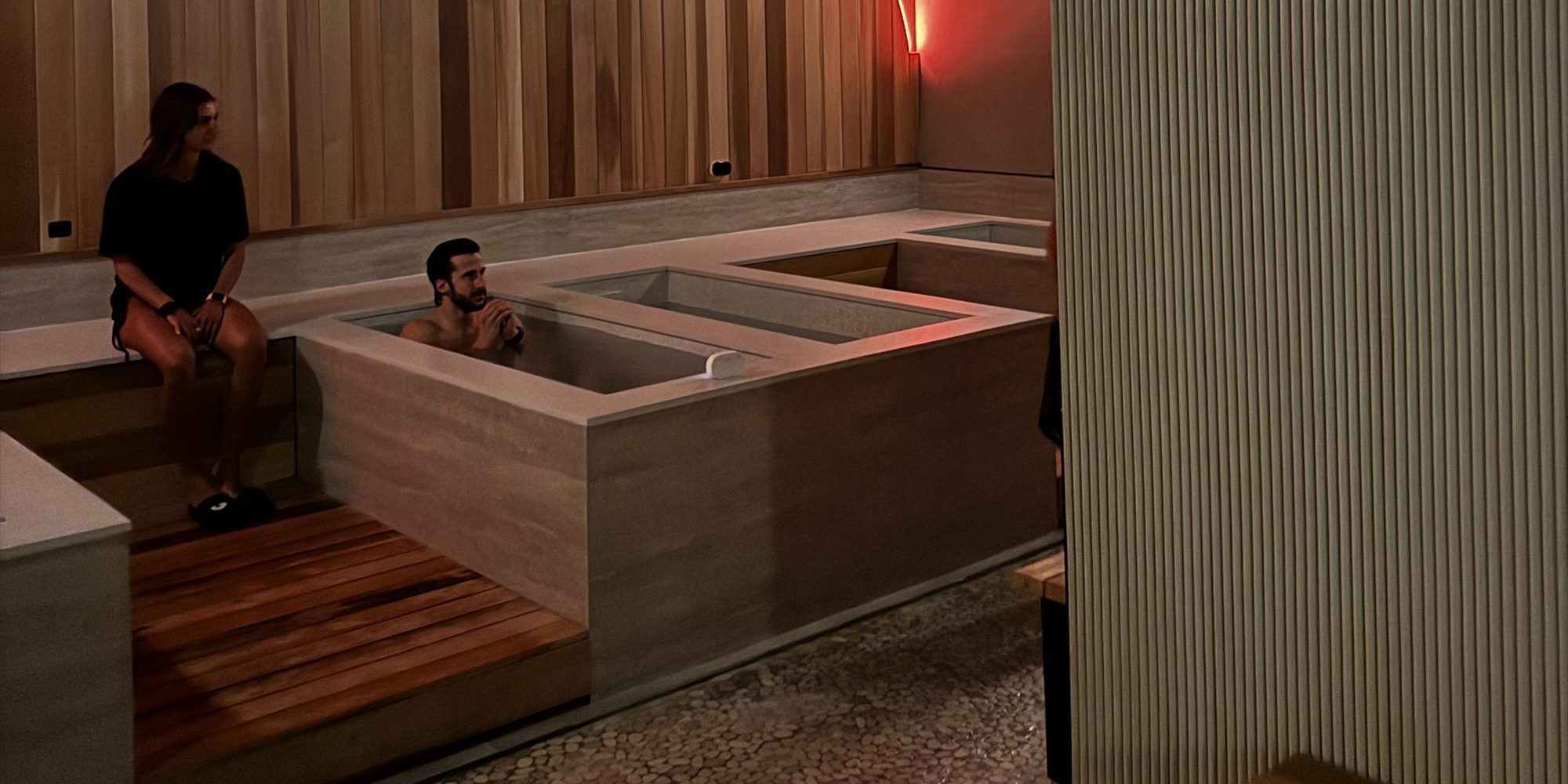
Cold plunges and ice baths have gone from elite sports recovery rooms to everyday wellness routines. Social media is full of big promises, so it is worth asking a simple question: what are the real cold plunge benefits, according to the research? Below we break down what happens when you step into cold water, what the best studies suggest, what they do not support, and how to plunge safely. If you are searching for an ice bath near you, our cold plunge in Vaughan is kept at around 3 to 7°C, and you can pair it with the sauna as part of contrast therapy.
What Happens When You Get In
The first minute in cold water is the most intense. The U.S. National Weather Service describes "cold shock": sudden immersion can trigger involuntary gasping, rapid breathing or hyperventilation, and a sudden spike in heart rate and blood pressure. A 2025 review in PLOS ONE describes the same early response as rapid activation of the sympathetic nervous system, with rises in noradrenaline (norepinephrine) and systolic blood pressure in the first minutes of immersion.
That initial jolt is why the first few breaths matter, and why starting slowly and calmly is the most important habit for a beginner.
What the Research Suggests
Stress, sleep and quality of life
The most comprehensive look at cold water and general wellbeing so far is a 2025 systematic review and meta-analysis by Cain and colleagues. It pooled 11 randomized trials with 3,177 healthy adults, using cold baths or showers between 7 and 15°C for anywhere from 30 seconds to 2 hours. The researchers found:
- Stress was significantly lower 12 hours after cold water immersion, though not immediately afterwards or at 24 and 48 hours.
- Single studies reported improvements in sleep quality and quality of life.
- One study found a 29% reduction in sickness absence among people who took regular cold showers.
- There was no significant effect on mood in the one trial that measured it.
- Markers of inflammation rose temporarily right after cold exposure, which the authors interpret as the body's acute response to the cold as a stressor.
The authors are clear about the limits: most studies looked at a single session, only one included women, and many samples were small. Their summary is that cold water immersion has time-dependent effects that look promising for stress and wellbeing, but more long-term research is needed.
Muscle soreness after exercise
Athletes have used ice baths for decades. A 2016 meta-analysis of nine randomized trials in Sports Medicine found that cold water immersion can be slightly better than passive rest for reducing muscle soreness, both right away and in the days after exercise. The best results came from water between about 11 and 15°C with immersion times of 11 to 15 minutes.
It is worth noting that most studies used longer immersions in less cold water than a typical plunge pool. A shorter dip in colder water is a different experience, and the research does not tell us exactly how the two compare.
What the Evidence Does Not Support (Yet)
Popular claims that cold plunging "boosts your immune system" or reliably lifts your mood are ahead of the science. The 2025 review found no significant effect on immune markers immediately or one hour after cold exposure, and no significant effect on mood. The reduction in sick days came from a single study of cold showers. These ideas may be worth studying further, but they are not established benefits.
Why People Pair the Cold Plunge With the Sauna
Many people find the cold far easier to face after warming up in a sauna. Alternating heat and cold is the basis of contrast therapy, and it is how most of our members use the plunge. Read more about the warm side in our guide to the benefits of the sauna, and about calming your breathing in breathwork for beginners. At Club Sūdō, red light therapy is also part of the contrast therapy experience.
Your First Cold Plunge: A Simple Guide
- Warm up first. A round in the sauna makes the transition easier. Our contrast therapy guidance is 10 to 15 minutes in the sauna, then 1 to 3 minutes in the cold plunge, repeated 2 to 3 times.
- Enter slowly and breathe. Focus on slow, steady breathing as the cold shock passes. Never hold your breath or breathe rapidly on purpose before putting your head under water.
- Keep it short. Start with 30 seconds to a minute and build up. Getting out early is always fine.
- Try a Guided session. Our Guided contrast therapy sessions are led by an instructor who takes you through breathwork and timed heat and cold cycles. In Open Flow sessions you move at your own pace, with on-floor staff available for support.
- Warm up gently afterwards. Use the showers, sit in the lounge with a complimentary organic tea, and let your body rewarm naturally.
Who Should Be Careful
- Heart and blood pressure conditions. Because cold shock causes a sudden spike in heart rate and blood pressure, people with cardiovascular conditions should speak with their doctor before trying a cold plunge. The authors of the 2025 review also advise people with pre-existing health conditions to take extra care.
- Raynaud's. Mayo Clinic lists putting your hands in cold water as an example of what can trigger a Raynaud's attack.
- Pregnancy. Talk to your health care provider before using a cold plunge.
- Never plunge alone, and never practise breath holds in the water. Life saving organizations warn that hyperventilating and breath holding before going under water can cause a sudden blackout.
If you feel faint, numb, confused or unwell, get out right away and tell a staff member.
Looking for an Ice Bath Near You?
Club Sūdō is at 16 Famous Ave, Unit 145, in Vaughan, near the Colossus Centre at Weston Road and Highway 7, a short drive from Woodbridge, Maple, Richmond Hill and North York. We are open Monday to Friday 6am to 10pm, Saturday 7am to 8pm and Sunday 8am to 8pm. Explore our cold plunge in Vaughan, book a session, or see memberships and passes.
Sources
- Cain T, Brinsley J, Bennett H, Nelson M, Maher C, Singh B. Effects of cold-water immersion on health and wellbeing: A systematic review and meta-analysis. PLOS ONE. 2025;20(1):e0317615. https://doi.org/10.1371/journal.pone.0317615
- Machado AF, Ferreira PH, Micheletti JK, et al. Can Water Temperature and Immersion Time Influence the Effect of Cold Water Immersion on Muscle Soreness? A Systematic Review and Meta-Analysis. Sports Medicine. 2016;46(4):503-514. https://doi.org/10.1007/s40279-015-0431-7
- U.S. National Weather Service. Cold Water Hazards and Safety. https://www.weather.gov/safety/coldwater
- Mayo Clinic. Raynaud's disease: Symptoms and causes. https://www.mayoclinic.org/diseases-conditions/raynauds-disease/symptoms-causes/syc-20363571
- Royal Life Saving Society UK. Shallow Water Blackout, Hyperventilation, and Breath Holding. https://www.rlss.org.uk/shallow-water-blackout-hyperventilation-and-breath-holding-gs005