
Joint pain and stiffness are among the most common reasons people ask about red light therapy, especially as they get older or train more. It is also the area where the evidence is thinnest, so it deserves a careful look. This guide explains the difference between red and near-infrared light, what systematic reviews report on joint and muscle pain, and how red light therapy at Club Sūdō in Vaughan can sit alongside low-impact movement.
The honest summary: some research on infrared therapies reports less joint and muscle pain, but there is not enough evidence to say red light panels help arthritis. If you live with arthritis or a diagnosed joint condition, speak with your physician or physiotherapist before starting.
How Near-Infrared Light Differs From Red Light
Red light is the visible red you can see. Infrared is light with longer wavelengths than the eye can detect, generally defined as starting around 700 to 750 nm. Scientists split infrared into bands. The near-infrared band runs from about 700 to 1,400 nm. Far-infrared starts much higher, around 3,000 nm, and is mostly felt as warmth. Red light therapy does not use ultraviolet light, the part of the spectrum behind tanning and sunburn.
That difference matters when you read about "infrared therapy." The word covers a wide range of things, from LED light panels to heat-emitting fabrics, patches and infrared saunas. Results from one do not automatically apply to another.
The Coldture PRO panel used at Club Sūdō combines both red and near-infrared light. According to the manufacturer, it has 720 LEDs across eight wavelengths: 630, 650, 660 and 670 nm in the red range, and 810, 830, 850 and 1060 nm, which fall in the near-infrared band.
What Systematic Reviews Report on Musculoskeletal Pain
A 2022 systematic review in the European Journal of Investigation in Health, Psychology and Education gathered 13 studies on infrared therapies for musculoskeletal conditions and chronic pain. Three focused on osteoarthritis, four on fibromyalgia and six on other conditions, including recovery from sports injuries and myofascial pain.
- Across the studies, people with musculoskeletal conditions reported lower pain scores after infrared-based therapy.
- People with fibromyalgia also scored better on a questionnaire about how the condition affects daily life.
- Results for low back pain were mixed, and one of the larger trials found light therapy no better than a placebo light.
- Infrared did not help muscle recovery after athletic injuries.
The big caveat: most of the studies in that review used phototherapy or infrared-emitting ceramic materials such as fabrics and patches, with fewer on infrared saunas. It was not a review of red light panels, so it is fairest to describe it as research on infrared therapies in general.
A 2024 meta-analysis focused more narrowly on light therapy for injured athletes. Across six randomized trials with 205 athletes, light therapy reduced pain compared with control groups. However, the two trials that measured return to play found no benefit. That supports the idea that light may ease discomfort, without showing that it changes the underlying injury.
For how red light research looks for skin and muscle soreness, where the evidence is stronger, read red light therapy benefits: what the research says and red light therapy for muscle recovery.
When to See a Doctor First
Joint pain has many causes, and some need medical attention. Before starting red light therapy, talk to your physician or physiotherapist if:
- You have arthritis, or any diagnosed joint or bone condition.
- A joint is red, hot or swollen, or the pain came on suddenly.
- The pain follows an injury, or wakes you at night.
- You have a photosensitive disorder, or take medications that make you sensitive to the sun.
Red light therapy can be part of a wellness routine, but it is not a substitute for diagnosis or care from a health professional.
Safety Note
A Cleveland Clinic dermatologist, Dr. Jennifer Lucas, advises that people with a photosensitive disorder, meaning sun exposure causes blisters or burns, should avoid red light therapy, as should people taking medications that increase sun sensitivity, such as certain antibiotics and blood pressure medications. Anyone with a medical condition should speak with their healthcare provider before starting. Because red light at Club Sūdō is part of a contrast therapy session, the studio's contrast therapy guidance also applies: check with your doctor first if you are pregnant, have a cardiovascular condition or have been advised to avoid temperature extremes.
Pairing With Low-Impact Reformer Pilates
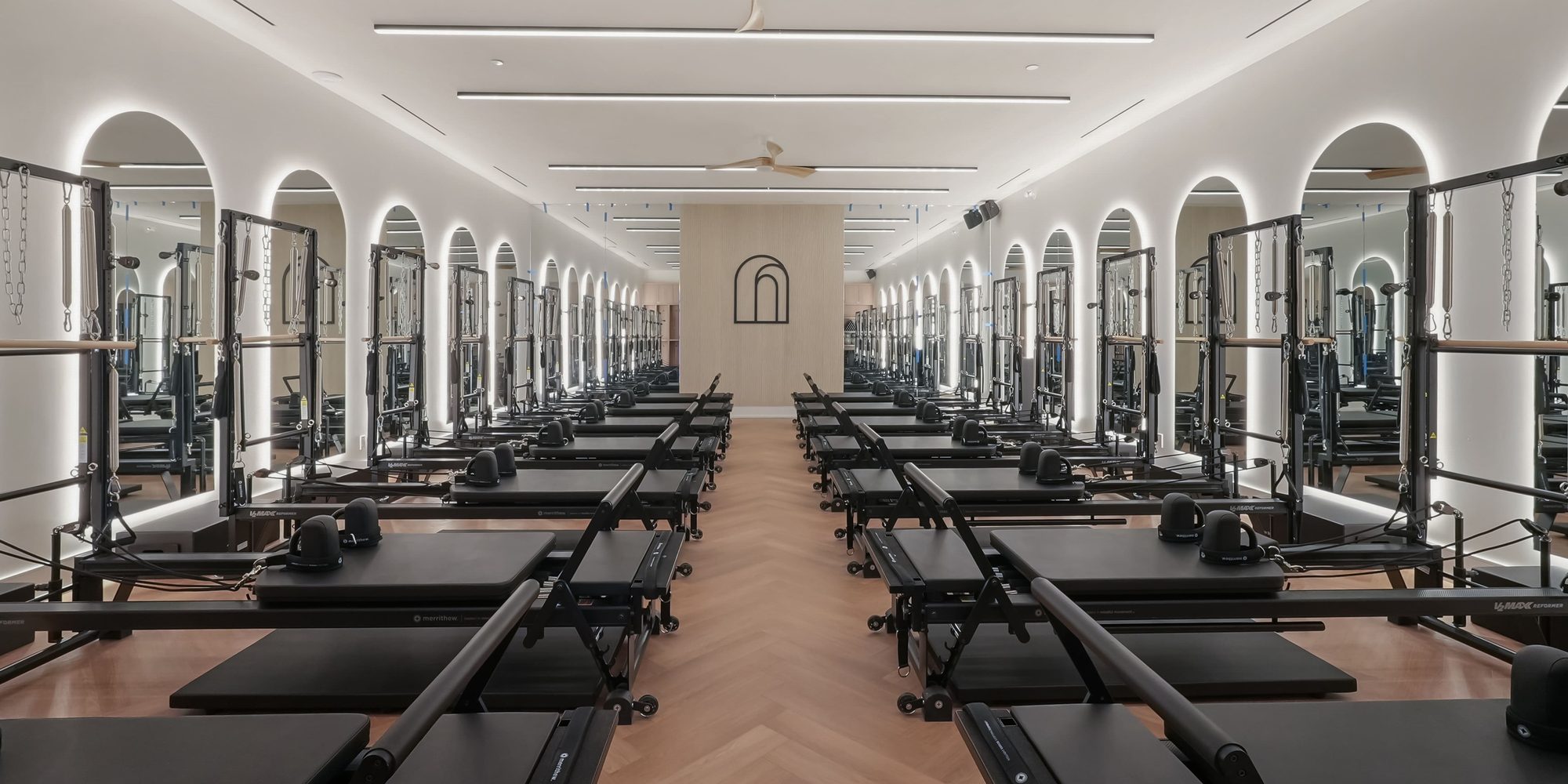
Many people with stiff joints look for ways to keep moving without pounding them. Reformer Pilates is a low-impact workout that builds strength through controlled movement against spring resistance, on Merrithew reformers. Classes at Club Sūdō are kept small, and our instructors offer modifications so you can work at your own level. If you are new, read what to expect at your first class, and check with your physiotherapist about which movements suit you.
After class, members often move into contrast therapy: our traditional dry-heat sauna, a cold plunge kept at around 3 to 7°C and red light therapy, all in one visit. If heat and cold are new to you, start with our contrast therapy guide.
Book in Vaughan
At Club Sūdō, red light therapy is part of the contrast therapy experience. We are at 16 Famous Ave, Unit 145, in Vaughan (Woodbridge), open Monday to Friday 6am to 10pm, Saturday 7am to 8pm and Sunday 8am to 8pm. Book a contrast therapy session or explore passes and memberships.
Sources
- Tsagkaris C, Papazoglou AS, Eleftheriades A, Tsakopoulos S, Alexiou A, Găman MA, Moysidis DV. Infrared radiation in the management of musculoskeletal conditions and chronic pain: a systematic review. European Journal of Investigation in Health, Psychology and Education. 2022;12(3):334-343. https://www.mdpi.com/2254-9625/12/3/24
- Morgan RM, Wheeler TD, Poolman MA, Haugen ENJ, LeMire SD, Fitzgerald JS. Effects of photobiomodulation on pain and return to play of injured athletes: a systematic review and meta-analysis. Journal of Strength and Conditioning Research. 2024;38(6):e310-e319. https://doi.org/10.1519/JSC.0000000000004752
- Cleveland Clinic Newsroom. Can Red Light Therapy Improve Your Skin and Hair? September 2, 2026. https://newsroom.clevelandclinic.org/2026/09/02/can-red-light-therapy-improve-your-skin-and-hair